Produkte

Produkte

SIP-Kommunikationsprodukte aus einer Hand - direkt vom Hersteller

Alle Produkte

Erfahrungen

Erfahrungen

Zuverlässige, stabile SIP-Kommunikationslösungen für alle Branchen.

Alle Fälle

Berührungspunkte

Berührungspunkte

Führender industrieller Spezialkommunikationsanbieter mit reichhaltigen globalen Fällen. Unsere explosionsgeschützten & SIP-Dispatch-Systeme treiben Projekte an - Ihr zuverlässiger Partner mit nachweislichem Erfolg.

weiterblättern

Transport

Öffentliche Sicherheit

Energy Industry

Ressourcen

Ressourcen

Entdecken Sie bewährte Verfahren, erforschen Sie innovative Lösungen und vernetzen Sie sich mit anderen Partnern in der Becke-Community.

Kontaktieren Sie uns
Wissen
2026-02-07 13:34:58
Leitfaden zur Auswahl explosionsgeschützter Telefone nach Schutzart und Gasgruppen
Dieser Leitfaden beschreibt die Klassifizierung explosionsgeschützter Telefone nach Schutzart, Gasgruppen und die wichtigsten Auswahlkriterien. Er bietet praktische Auswahlhinweise und warnt vor häufigen Fehlern in explosionsgefährdeten Bereichen wie der Petrochemie und dem Kohlebergbau. Basierend auf der Norm GB/T 3836 unterstützt er Techniker und Einkäufer bei der präzisen Auswahl und gewährleistet so eine sichere Kommunikation vor Ort.

Becke Telcom

Leitfaden zur Auswahl explosionsgeschützter Telefone nach Schutzart und Gasgruppen

Explosionsgeschützte Telefone sind zentrale Kommunikationsgeräte in explosionsgefährdeten Umgebungen. Der sichere Betrieb hängt entscheidend von der präzisen Übereinstimmung zwischen Explosionsschutzklasse des Geräts und der vor Ort vorhandenen Gasgruppe ab.
Eine falsche Zuordnung führt nicht nur dazu, dass der Explosionsschutz seine Schutzwirkung verliert, sondern kann auch dazu führen, dass durch elektrische Funken oder heiße Oberflächen des Geräts Explosionen ausgelöst werden. Dies kann schwere Sachschäden, Personenschäden sowie Produktionsstillstände verursachen.

Derzeit basieren die Klassifizierung der Explosionsschutzstufen und Gasgruppen explosionsgeschützter Telefone in China vollständig auf der Normenreihe GB/T 3836, die mit der internationalen Norm IEC 60079 harmonisiert ist. Dadurch wird eine einheitliche Grundlage für Gerätesicherheit und Anwendungskompatibilität geschaffen und eine klare Entscheidungsbasis für B2B-Einkäufer und technische Fachkräfte bereitgestellt.
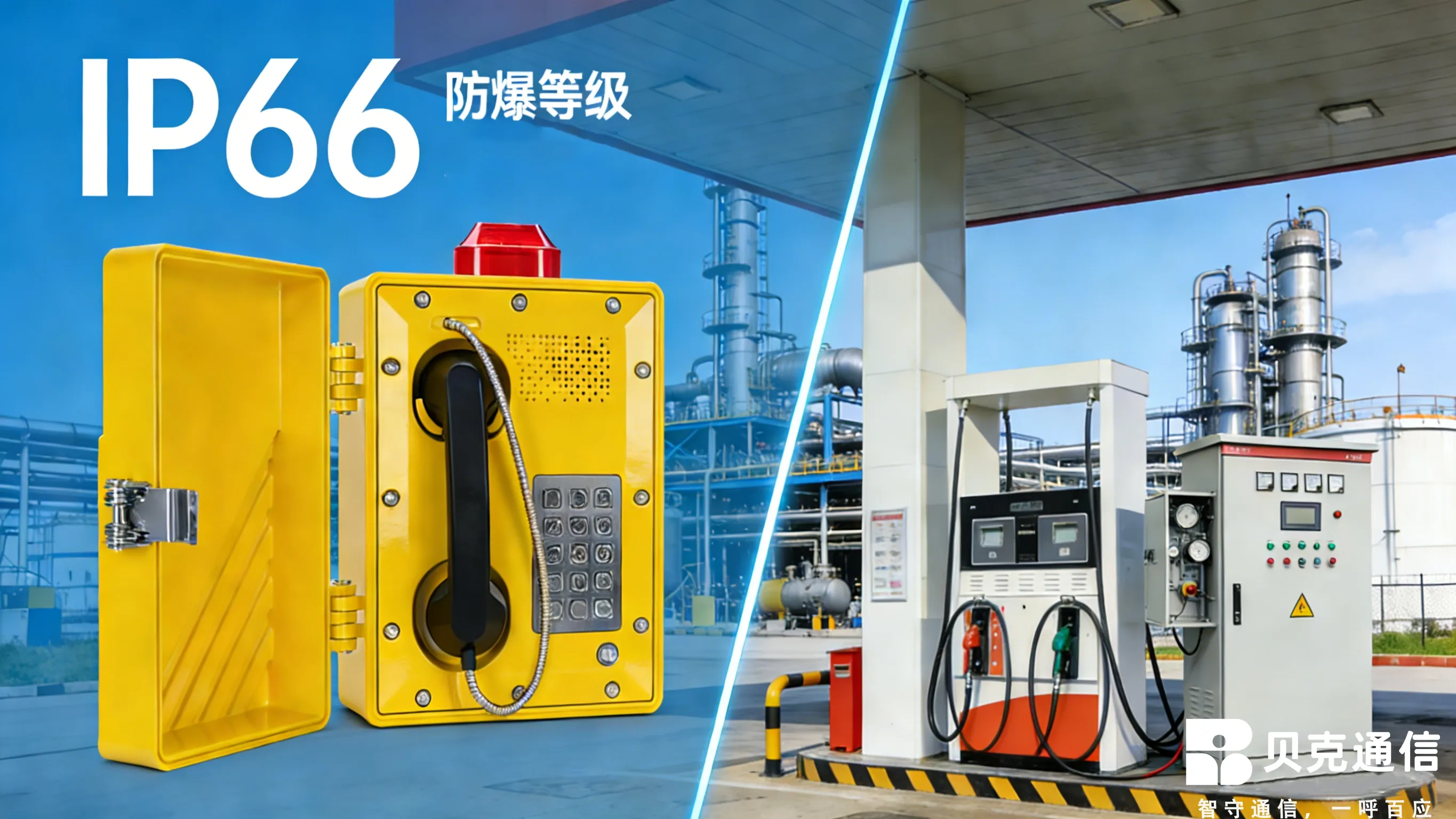
Die explosionsgeschützte Klasse von Explosionsschutztelefonen,


I. Grundverständnis der Explosionsschutzklassen von explosionsgeschützten Telefonen

1.1 Grundlagen und Normen der Explosionsschutzklassifizierung

Die Explosionsschutzklasse eines explosionsgeschützten Telefons beschreibt dessen Fähigkeit, das Entzünden explosionsfähiger Atmosphären zuverlässig zu verhindern. Die Klassifizierung basiert auf der Explosionsschutzart und dem Schutzniveau des Geräts und erfolgt gemäß der Norm GB/T 3836.1-2021 „Explosionsfähige Atmosphären – Teil 1: Geräte – Allgemeine Anforderungen“.
Diese Norm ist seit dem 1. Mai 2022 die zentrale Grundlage für die verpflichtende Zertifizierung explosionsgeschützter elektrischer Betriebsmittel.

Gängige Explosionsschutzarten für explosionsgeschützte Telefone sind:

  • Druckfeste Kapselung (Ex d)

  • Eigensicherheit (Ex i)

  • Erhöhte Sicherheit (Ex e)

Am weitesten verbreitet sind Ex d und Ex i:

  • Ex d begrenzt eine interne Explosion durch ein robustes Gehäuse, sodass keine Zündung der äußeren explosionsfähigen Atmosphäre erfolgt.

  • Ex i begrenzt die elektrische Energie im Stromkreis so, dass weder Funken noch thermische Effekte – im Normal- oder Fehlerfall – eine Zündung verursachen können.


1.2 Übliche Explosionsschutzkennzeichnungen und ihre Bedeutung

Die Kennzeichnung explosionsgeschützter Telefone besteht in der Regel aus
„Ex + Schutzart + Gasgruppe + Temperaturklasse + Geräteschutzniveau“, z. B.:

Ex d IIC T4 Gb

Bedeutung der einzelnen Bestandteile:

  • Ex: Explosionsschutzkennzeichnung

  • Schutzart (d, i usw.): Konstruktives Explosionsschutzprinzip

  • Gasgruppe (IIC): Geeignete explosive Gase

  • Temperaturklasse (T4): Maximal zulässige Oberflächentemperatur

  • Geräteschutzniveau (Gb): Zulässiger Einsatzbereich (Zone 1 / Zone 2)

Explosionsgeschützte Telefone werden entsprechend ihrer Einsatzbereiche in:

  • Gruppe I – für den Einsatz im Bergbau (Methan)

  • Gruppe II – für alle anderen explosionsfähigen Gasatmosphären

unterteilt. Gruppe II wird weiter in IIA, IIB und IIC differenziert.
Je höher die Klasse, desto stärker der Explosionsschutz und desto größer das abgedeckte Gasartenspektrum.


II. Klassifizierung gefährlicher Gase und Identifikation vor Ort

2.1 Grundlagen der Gasgruppeneinteilung

Die Einteilung gefährlicher Gase erfolgt nach ihrer Zündwilligkeit, basierend auf zwei zentralen Parametern:

  • Maximaler experimenteller Sicherheits-Spalt (MESG)

  • Minimaler Zündstromfaktor (MICR)

Gemäß GB/T 3836 und IEC 60079 werden explosive Gase (außer Methan im Bergbau) in IIA, IIB und IIC unterteilt; Methan wird separat als Gruppe I klassifiziert.

Je kleiner MESG und MICR, desto leichter entzündlich ist das Gas und desto höher sind die Anforderungen an den Explosionsschutz.

Typische Gase:

  • IIA: Propan, Benzin, Aceton
    MESG ≥ 0,9 mm, MICR > 0,8 – geringste Explosionsneigung

  • IIB: Ethylen, Koksofengas, Dimethylether
    0,5 < MESG < 0,9 mm, 0,45 ≤ MICR ≤ 0,8

  • IIC: Wasserstoff, Acetylen, Schwefelkohlenstoff
    MESG ≤ 0,5 mm, MICR < 0,45 – höchste Explosionsgefahr


2.2 Typische Gasgruppen in verschiedenen Industrien

  • Bergbau: hauptsächlich Methan (Gruppe I), vereinzelt IIB-Gase

  • Petrochemie:

    • Raffinerien: IIA (Benzin-, Diesel­dämpfe)

    • Reaktoren: IIB (Ethylen)

    • Wasserstoffanlagen: IIC

  • Pharmaindustrie: überwiegend IIA (Ethanol, Aceton)

  • Metallurgie: IIA und IIB (z. B. Koksofengas)


III. Grundprinzipien der Zuordnung von Explosionsschutzklasse und Gasgruppe

3.1 Zentrales Zuordnungsprinzip

Das grundlegende Sicherheitsprinzip lautet:

Die Explosionsschutzklasse des Geräts muss mindestens der höchsten vor Ort vorkommenden Gasgruppe entsprechen, und die Temperaturklasse des Geräts muss unterhalb der niedrigsten Zündtemperatur der Gase liegen.

  • IIC-Geräte sind abwärtskompatibel zu IIB und IIA

  • IIB-Geräte sind abwärtskompatibel zu IIA

  • Umgekehrt ist dies nicht zulässig

Beispiel:
Ein IIB-Gerät darf nicht in einer Wasserstoffumgebung (IIC) eingesetzt werden, da selbst kleinste Funken eine Explosion auslösen können.


3.2 Unterschiede je nach Explosionsschutzart

  • Ex d (druckfeste Kapselung)
    Geeignet für IIA–IIC, besonders robust, ideal für staubige und raue Umgebungen (Bergbau, Metallurgie)

  • Ex i (Eigensicherheit)
    Besonders geeignet für IIC-Gase, flexible Installation, ideal für chemische Prozessbereiche

  • Ex e (erhöhte Sicherheit)
    Vorwiegend für IIA/IIB, nicht empfohlen für IIC-Hochrisikobereiche


3.3 Typische Fehlannahmen bei der Auswahl

  • „Je höher, desto besser“ – unnötige Kosten bei überdimensionierter Auswahl

  • Verwechslung von Gas- und Temperaturklasse

  • Missachtung der Zonenklassifizierung

    • Zone 1 → Geräteschutzniveau Gb

    • Zone 2 → Gc


IV. Praxisbeispiele aus verschiedenen Industrien

4.1 Petrochemie (IIA)

Empfehlung: Ex d IIA T3 Gc
Geeignet für Zone 2, ausreichender Temperaturabstand, robuste Bauweise

4.2 Bergbau (Gruppe I)

Empfehlung: Ex i IIC T4 Gb
Eigensicher, kompatibel mit Methan und IIB-Gasen, IP66 für Staub und Feuchtigkeit

4.3 Feinchemie (IIC)

Empfehlung: Ex d IIC T4 Gb
Geeignet für Wasserstoffbereiche, hohe mechanische und chemische Beständigkeit
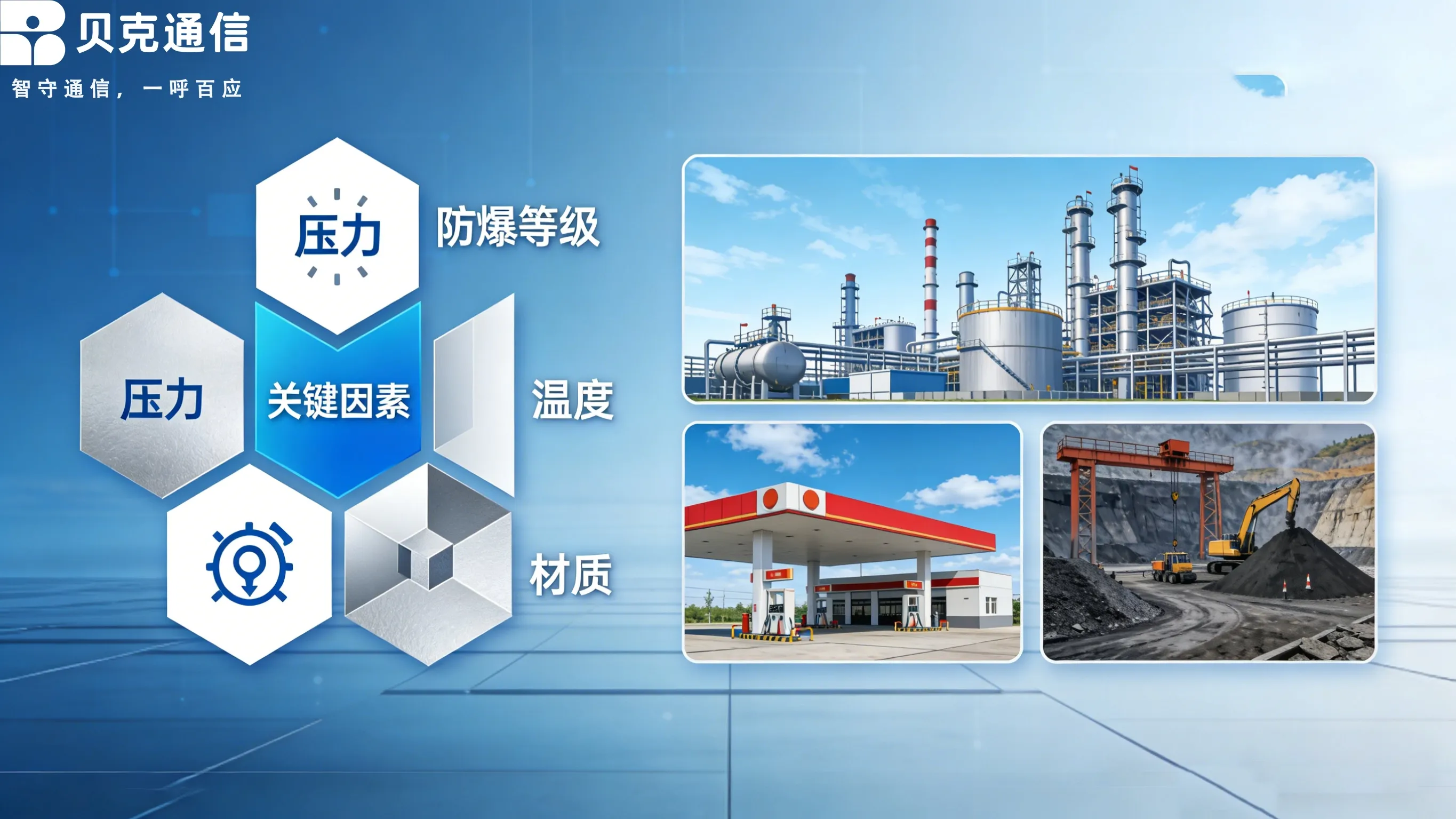
Die unterschiedlichen Anforderungen verschiedener Branchen an die Explosionsgeschütztheitsklasse von Explosionsschutztelefonen


V. Auswahlpraxis: Schnelle und sichere Gerätezuteilung

5.1 Drei-Schritte-Auswahlmethode

  1. Gasparameter bestimmen (Gasgruppe, Zündtemperatur, Zone)

  2. Explosionsschutzart und -klasse wählen

  3. Temperaturklasse und Zertifikate prüfen

5.2 Technische Prüfpunkte

  • Vollständige Ex-Kennzeichnung

  • Gültige Zertifikate nach GB/T 3836

  • Passende IP-Schutzart (≥ IP65 bei Staub, Feuchte)

  • Korrekte Verdrahtung bei Ex-i-Geräten (Sicherheitsbarriere)


VI. Häufig gestellte Fragen (FAQ)

F1: Kann ein IIB-Gerät in IIC-Umgebung eingesetzt werden?
Antwort: Nein.

F2: Mehrere Gasarten vor Ort – wie auswählen?
Antwort: Immer nach der gefährlichsten Gasgruppe auslegen.

F3: Zusammenhang zwischen Ex-Klasse und IP-Schutz?
Antwort: Unabhängig voneinander, beide müssen erfüllt sein.

F4: Können importierte Geräte direkt eingesetzt werden?
Antwort: Nur bei Kompatibilität mit GB/T 3836 und vollständiger Prüfung.


Schlussfolgerung

Die korrekte Zuordnung von Explosionsschutzklasse und Gasgruppe ist die zentrale Voraussetzung für sichere Kommunikation in explosionsgefährdeten Bereichen.
Das Grundprinzip lautet:

Explosionsschutzklasse ≥ Gasgruppe
Temperaturklasse < Zündtemperatur des Gases

Nur durch normkonforme Auswahl, vollständige Zertifizierung und praxisgerechte Anpassung kann die Schutzfunktion explosionsgeschützter Telefone zuverlässig gewährleistet werden – und damit die Sicherheit von Personal, Anlagen und Produktionsprozessen nachhaltig abgesichert werden.


Etikett:


Becke Telcom ist auf industrielle explosionsgeschützte Kommunikation für den Schienen-, Tunnel-, Öl- und Gassektor sowie die Schifffahrt spezialisiert und bietet PAGA-, SOS- und IP-Telefone mit integrierter Beschallung, Gegensprechanlage und Anrufen an.


Copyright © 2012-202Becke Telcom Alle Rechte vorbehalten

Hinterlassen Sie Ihre Nachricht

Wenn Sie Anregungen oder Fragen an uns haben, können Sie uns gerne kontaktieren!

We use cookie to improve your online experience. By continuing to browse this website, you agree to our use of cookie.

Cookies

Please read our Terms and Conditions and this Policy before accessing or using our Services. If you cannot agree with this Policy or the Terms and Conditions, please do not access or use our Services. If you are located in a jurisdiction outside the European Economic Area, by using our Services, you accept the Terms and Conditions and accept our privacy practices described in this Policy.
We may modify this Policy at any time, without prior notice, and changes may apply to any Personal Information we already hold about you, as well as any new Personal Information collected after the Policy is modified. If we make changes, we will notify you by revising the date at the top of this Policy. We will provide you with advanced notice if we make any material changes to how we collect, use or disclose your Personal Information that impact your rights under this Policy. If you are located in a jurisdiction other than the European Economic Area, the United Kingdom or Switzerland (collectively “European Countries”), your continued access or use of our Services after receiving the notice of changes, constitutes your acknowledgement that you accept the updated Policy. In addition, we may provide you with real time disclosures or additional information about the Personal Information handling practices of specific parts of our Services. Such notices may supplement this Policy or provide you with additional choices about how we process your Personal Information.


Cookies

Cookies are small text files stored on your device when you access most Websites on the internet or open certain emails. Among other things, Cookies allow a Website to recognize your device and remember if you've been to the Website before. Examples of information collected by Cookies include your browser type and the address of the Website from which you arrived at our Website as well as IP address and clickstream behavior (that is the pages you view and the links you click).We use the term cookie to refer to Cookies and technologies that perform a similar function to Cookies (e.g., tags, pixels, web beacons, etc.). Cookies can be read by the originating Website on each subsequent visit and by any other Website that recognizes the cookie. The Website uses Cookies in order to make the Website easier to use, to support a better user experience, including the provision of information and functionality to you, as well as to provide us with information about how the Website is used so that we can make sure it is as up to date, relevant, and error free as we can. Cookies on the Website We use Cookies to personalize your experience when you visit the Site, uniquely identify your computer for security purposes, and enable us and our third-party service providers to serve ads on our behalf across the internet.

We classify Cookies in the following categories:
 ●  Strictly Necessary Cookies
 ●  Performance Cookies
 ●  Functional Cookies
 ●  Targeting Cookies


Cookie List
A cookie is a small piece of data (text file) that a website – when visited by a user – asks your browser to store on your device in order to remember information about you, such as your language preference or login information. Those cookies are set by us and called first-party cookies. We also use third-party cookies – which are cookies from a domain different than the domain of the website you are visiting – for our advertising and marketing efforts. More specifically, we use cookies and other tracking technologies for the following purposes:

Strictly Necessary Cookies
These cookies are necessary for the website to function and cannot be switched off in our systems. They are usually only set in response to actions made by you which amount to a request for services, such as setting your privacy preferences, logging in or filling in forms. You can set your browser to block or alert you about these cookies, but some parts of the site will not then work. These cookies do not store any personally identifiable information.

Functional Cookies
These cookies enable the website to provide enhanced functionality and personalisation. They may be set by us or by third party providers whose services we have added to our pages. If you do not allow these cookies then some or all of these services may not function properly.

Performance Cookies
These cookies allow us to count visits and traffic sources so we can measure and improve the performance of our site. They help us to know which pages are the most and least popular and see how visitors move around the site. All information these cookies collect is aggregated and therefore anonymous. If you do not allow these cookies we will not know when you have visited our site, and will not be able to monitor its performance.

Targeting Cookies
These cookies may be set through our site by our advertising partners. They may be used by those companies to build a profile of your interests and show you relevant adverts on other sites. They do not store directly personal information, but are based on uniquely identifying your browser and internet device. If you do not allow these cookies, you will experience less targeted advertising.

How To Turn Off Cookies
You can choose to restrict or block Cookies through your browser settings at any time. Please note that certain Cookies may be set as soon as you visit the Website, but you can remove them using your browser settings. However, please be aware that restricting or blocking Cookies set on the Website may impact the functionality or performance of the Website or prevent you from using certain services provided through the Website. It will also affect our ability to update the Website to cater for user preferences and improve performance. Cookies within Mobile Applications

We only use Strictly Necessary Cookies on our mobile applications. These Cookies are critical to the functionality of our applications, so if you block or delete these Cookies you may not be able to use the application. These Cookies are not shared with any other application on your mobile device. We never use the Cookies from the mobile application to store personal information about you.

If you have questions or concerns regarding any information in this Privacy Policy, please contact us by email at . You can also contact us via our customer service at our Site.