Produkte

Produkte

SIP-Kommunikationsprodukte aus einer Hand - direkt vom Hersteller

Alle Produkte

Erfahrungen

Erfahrungen

Zuverlässige, stabile SIP-Kommunikationslösungen für alle Branchen.

Alle Fälle

Berührungspunkte

Berührungspunkte

Führender industrieller Spezialkommunikationsanbieter mit reichhaltigen globalen Fällen. Unsere explosionsgeschützten & SIP-Dispatch-Systeme treiben Projekte an - Ihr zuverlässiger Partner mit nachweislichem Erfolg.

weiterblättern

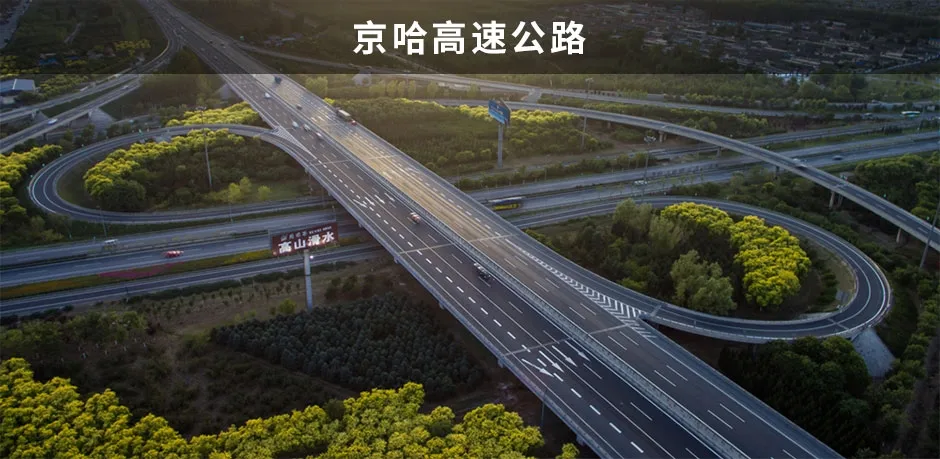
Transport

Öffentliche Sicherheit

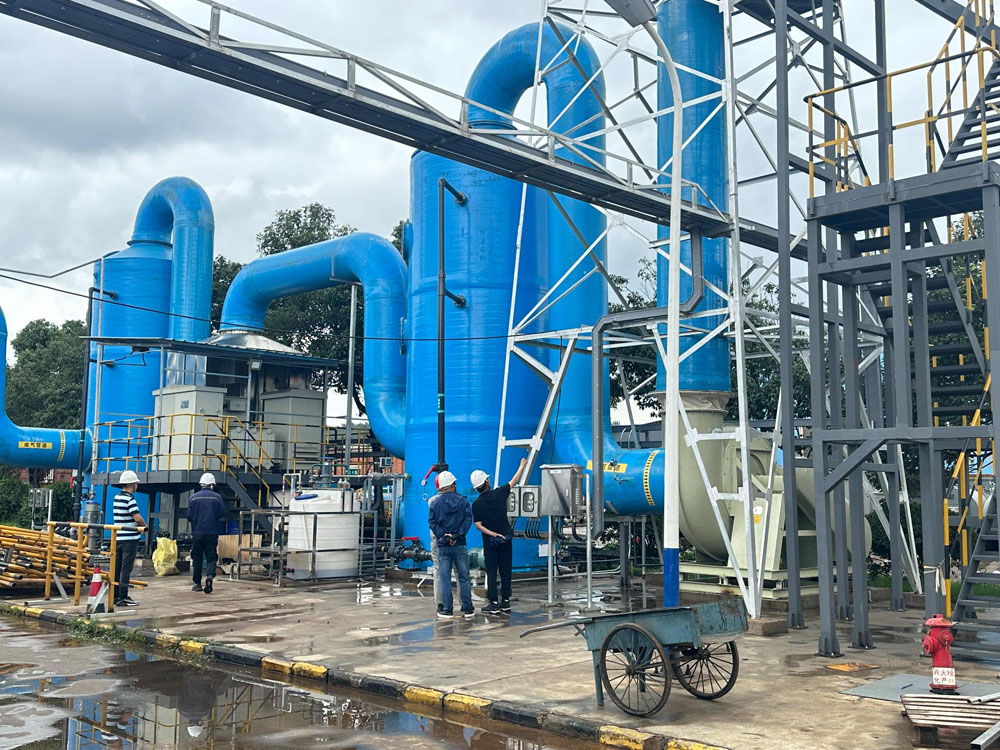
Energy Industry

Ressourcen

Ressourcen

Entdecken Sie bewährte Verfahren, erforschen Sie innovative Lösungen und vernetzen Sie sich mit anderen Partnern in der Becke-Community.

Kontaktieren Sie uns
Wissen
2026-02-02 15:17:13
Umweltprüfung explosionsgeschützter Sprechstellen
Bombenschutz für die u-bahn suchen. In gefährlichen industriellen bereichen wie erdöl, erdgas und bergbau kann die kommunikation durch temperatur, luftfeuchtigkeit und vibrationen gewährleistet werden.

Becke Telcom

Umweltprüfung explosionsgeschützter Sprechstellen

In der sicherheitskritischen Welt der Industrie sind explosionsgeschützte Sprechstellen (PA-Call-Stations) die Lebensader der Kommunikation. Diese Geräte wurden speziell für Umgebungen mit hohem Lärmpegel und Explosionsgefahr entwickelt und müssen dort mit absoluter Zuverlässigkeit funktionieren, wo Standardelektronik versagen oder – noch schlimmer – zur Zündquelle werden würde.

Da Industrien zunehmend auf Automatisierung und Intelligenz (Industrie 4.0) setzen, fordern Sektoren wie Petrochemie, Bergbau, Pharmazie und Abwasserbehandlung mehr von ihrer Kommunikationsinfrastruktur. Sicherzustellen, dass diese Geräte extreme Temperaturen, Feuchtigkeit, Vibrationen und Stürze überstehen, ist nicht nur eine Qualitätskontrolle, sondern ein entscheidender Sicherheitsauftrag.

Ein spezielles Kommunikationsgerät für gefährliche Umgebungen, das Telefonie und Lautsprecherfunktionen in extremen Bedingungen kombiniert.


1. Definition von explosionsgeschützten Sprechstellen

Eine explosionsgeschützte Sprechstelle ist ein hybrides Kommunikationsgerät, das Standard-Telefonfunktionen mit leistungsstarken Lautsprecherdurchsagen kombiniert. Das Designkonzept basiert auf zwei primären Schutzarten:

  1. Druckfeste Kapselung ("d"): Ein robustes Gehäuse, das eine interne Explosion eindämmt und verhindert, dass diese die umgebende Atmosphäre entzündet.

  2. Eigensicherheit ("i"): Stromkreise, die mit so geringen Energieniveaus arbeiten, dass sie keinen Funken oder thermischen Effekt erzeugen können, der brennbare Gase oder Stäube entzünden könnte.

Technischer Kern: DSP-Technologie

Das herausragende Merkmal moderner Stationen ist der DSP-Chip. Durch adaptive Filterung, Echounterdrückung und Frequenzentzerrung filtern diese Geräte industrielle Hintergrundgeräusche heraus und gewährleisten eine glasklare Sprachübertragung selbst in Umgebungen mit 90 dB bis 120 dB.


2. Regulatorische Compliance: Prüfstandards

In China ist die GB 3836-Serie der Maßstab, die eng mit den internationalen IECEx- und ATEX-Standards abgestimmt ist. Zu den wichtigsten Vorschriften gehören:

  • GB/T 3836.1-2021 (Allgemeine Anforderungen): Der Basisstandard für Geräte in explosionsgefährdeten Bereichen.

  • GB/T 3836.2-2021 (Druckfeste Kapselung "d"): Fokus auf mechanische Festigkeit und die Fähigkeit des Gehäuses, eine Flammenübertragung zu verhindern.

  • GB/T 3836.4-2021 (Eigensicherheit "i"): Begrenzt elektrische Parameter (z. B. $U_i \leq 30V$, $I_i \leq 100mA$, $P_i \leq 0,8W$).

  • IP-Schutzarten (GB/T 4208-2008): Definiert Staub- und Wasserschutz, wobei für den Industrieeinsatz meist IP65 oder IP67 erforderlich ist.


3. Temperaturanpassungstests

Industrieumgebungen schwanken zwischen arktischer Kälte und der glühenden Hitze eines Ofenraums. Standardtests decken einen Bereich von -20 °C bis +60 °C ab.

Wichtige Prüfverfahren:

  • Hochtemperaturtest: Das Gerät wird für 2 Stunden bei +60 °C gelagert. Analysten prüfen auf Materialverformung oder Leistungsabfall der Elektronik.

  • Niedrigtemperaturtest: Bei -20 °C liegt der Fokus auf der Effizienz der Batterieentladung und der Reaktionsfähigkeit des DSP-Chips.

  • Temperaturwechselprüfung: Die Station durchläuft mindestens fünf Zyklen zwischen -20 °C und +50 °C, um eine langfristige Außenexposition zu simulieren.

  • Erwärmungsprüfung: Stellt sicher, dass die Geräteoberfläche niemals den Grenzwert ihrer Gruppe überschreitet (z. B. T6 $\leq$ 85 °C).

Daten-Erkenntnis: Tests haben gezeigt, dass bei -20 °C die Lautsprecherleistung um etwa 15 % sinken kann und die Verzögerung der Tastenreaktion um 0,5 Sekunden zunimmt. Diese Daten sind für Ingenieure unerlässlich, um Niedrigtemperatur-Schutzschaltungen zu optimieren.


4. Feuchtigkeits- und Korrosionsbeständigkeit

Feuchtigkeit ist der Feind elektrischer Schaltkreise. Hochfeuchtigkeitstests bewerten die Integrität der Dichtungen und die Korrosionsschutzeigenschaften des Gehäuses (oft aus 316L-Edelstahl oder antistatischem Polyester).

  • Feuchte Hitze: Geräte werden +40 °C bei 95 % relativer Luftfeuchtigkeit ausgesetzt (fest installierte Geräte für 21 Tage).

  • Tauchtitest (IP67): Das Gerät wird für 30 bis 60 Minuten in 1 Meter tiefes Wasser getaucht.

  • Isolationswiderstand: Nach dem Test muss der Isolationswiderstand $\geq$ 100 M$\Omega$ betragen, um Kurzschlüsse oder Leckströme zu vermeiden.


5. Vibration und mechanische Stabilität

Industriestandorte sind selten still. Ständige Maschinen-Vibrationen können Schrauben lösen oder den flammendurchtrittssicheren Spalt beeinträchtigen.

  • Sinusförmige Vibration: Frequenzbereich von 10 Hz–500 Hz bei einer Beschleunigung von 3–5 m/s².

  • Zufallsvibration: Simuliert komplexe Transport- und Betriebsbelastungen bei 0,04 g²/Hz.

  • Kritischer Prüfpunkt: Nach der Vibration darf der "zünddurchschlagsichere Spalt" den Grenzwert von 0,15 mm nicht überschreiten.


6. Sturz- und Stoßfestigkeit

Unfälle passieren. Eine Sprechstelle muss einen Sturz während der Installation oder einen Stoß durch bewegliche Geräte überstehen.

  • Freier Fall: Das Gerät wird aus 1 Meter Höhe auf eine starre Beton- oder Stahlfläche fallen gelassen, wobei alle sechs Seiten, Ecken und Kanten geprüft werden.

  • Strukturelle Integrität: Der Test validiert, dass interne Komponenten – insbesondere schwere Transformatoren und die empfindliche DSP-Platine – fest an ihrem Platz bleiben.


7. Zukunftstrends und Industrie 4.0

Die Branche bewegt sich weg von reinen "Pass/Fail"-Tests hin zur vorhersagbaren Zuverlässigkeit (Predictive Reliability).

  • Intelligente Testsysteme: Die Automatisierung nutzt digitale Sensoren, die Spaltmaße mit einer Genauigkeit von 0,005 mm justieren.

  • Wasserstoffwirtschaft: Aufgrund der geringen Zündenergie von Wasserstoff werden die Teststandards noch strenger.

  • IIoT-Integration: Zukünftige Sprechstellen werden auf ihre Fähigkeit geprüft, mit dem Industrial IoT für Ferndiagnose und Notfall-Evakuierungssysteme zu interagieren.


8. Fazit: Sicherheit und Wettbewerbsfähigkeit

Umgebungsanpassungstests sind die Brücke zwischen einem theoretischen Design und einem lebensrettenden Werkzeug. Für Hersteller sind diese Tests keine regulatorischen Hürden, sondern Chancen für Innovationen bei Material (z. B. Nanobeschichtungen) und Signalstabilität.


Etikett:


Becke Telcom ist auf industrielle explosionsgeschützte Kommunikation für den Schienen-, Tunnel-, Öl- und Gassektor sowie die Schifffahrt spezialisiert und bietet PAGA-, SOS- und IP-Telefone mit integrierter Beschallung, Gegensprechanlage und Anrufen an.


Copyright © 2012-202Becke Telcom Alle Rechte vorbehalten

Hinterlassen Sie Ihre Nachricht

Wenn Sie Anregungen oder Fragen an uns haben, können Sie uns gerne kontaktieren!

We use cookie to improve your online experience. By continuing to browse this website, you agree to our use of cookie.

Cookies

Please read our Terms and Conditions and this Policy before accessing or using our Services. If you cannot agree with this Policy or the Terms and Conditions, please do not access or use our Services. If you are located in a jurisdiction outside the European Economic Area, by using our Services, you accept the Terms and Conditions and accept our privacy practices described in this Policy.
We may modify this Policy at any time, without prior notice, and changes may apply to any Personal Information we already hold about you, as well as any new Personal Information collected after the Policy is modified. If we make changes, we will notify you by revising the date at the top of this Policy. We will provide you with advanced notice if we make any material changes to how we collect, use or disclose your Personal Information that impact your rights under this Policy. If you are located in a jurisdiction other than the European Economic Area, the United Kingdom or Switzerland (collectively “European Countries”), your continued access or use of our Services after receiving the notice of changes, constitutes your acknowledgement that you accept the updated Policy. In addition, we may provide you with real time disclosures or additional information about the Personal Information handling practices of specific parts of our Services. Such notices may supplement this Policy or provide you with additional choices about how we process your Personal Information.


Cookies

Cookies are small text files stored on your device when you access most Websites on the internet or open certain emails. Among other things, Cookies allow a Website to recognize your device and remember if you've been to the Website before. Examples of information collected by Cookies include your browser type and the address of the Website from which you arrived at our Website as well as IP address and clickstream behavior (that is the pages you view and the links you click).We use the term cookie to refer to Cookies and technologies that perform a similar function to Cookies (e.g., tags, pixels, web beacons, etc.). Cookies can be read by the originating Website on each subsequent visit and by any other Website that recognizes the cookie. The Website uses Cookies in order to make the Website easier to use, to support a better user experience, including the provision of information and functionality to you, as well as to provide us with information about how the Website is used so that we can make sure it is as up to date, relevant, and error free as we can. Cookies on the Website We use Cookies to personalize your experience when you visit the Site, uniquely identify your computer for security purposes, and enable us and our third-party service providers to serve ads on our behalf across the internet.

We classify Cookies in the following categories:
 ●  Strictly Necessary Cookies
 ●  Performance Cookies
 ●  Functional Cookies
 ●  Targeting Cookies


Cookie List
A cookie is a small piece of data (text file) that a website – when visited by a user – asks your browser to store on your device in order to remember information about you, such as your language preference or login information. Those cookies are set by us and called first-party cookies. We also use third-party cookies – which are cookies from a domain different than the domain of the website you are visiting – for our advertising and marketing efforts. More specifically, we use cookies and other tracking technologies for the following purposes:

Strictly Necessary Cookies
These cookies are necessary for the website to function and cannot be switched off in our systems. They are usually only set in response to actions made by you which amount to a request for services, such as setting your privacy preferences, logging in or filling in forms. You can set your browser to block or alert you about these cookies, but some parts of the site will not then work. These cookies do not store any personally identifiable information.

Functional Cookies
These cookies enable the website to provide enhanced functionality and personalisation. They may be set by us or by third party providers whose services we have added to our pages. If you do not allow these cookies then some or all of these services may not function properly.

Performance Cookies
These cookies allow us to count visits and traffic sources so we can measure and improve the performance of our site. They help us to know which pages are the most and least popular and see how visitors move around the site. All information these cookies collect is aggregated and therefore anonymous. If you do not allow these cookies we will not know when you have visited our site, and will not be able to monitor its performance.

Targeting Cookies
These cookies may be set through our site by our advertising partners. They may be used by those companies to build a profile of your interests and show you relevant adverts on other sites. They do not store directly personal information, but are based on uniquely identifying your browser and internet device. If you do not allow these cookies, you will experience less targeted advertising.

How To Turn Off Cookies
You can choose to restrict or block Cookies through your browser settings at any time. Please note that certain Cookies may be set as soon as you visit the Website, but you can remove them using your browser settings. However, please be aware that restricting or blocking Cookies set on the Website may impact the functionality or performance of the Website or prevent you from using certain services provided through the Website. It will also affect our ability to update the Website to cater for user preferences and improve performance. Cookies within Mobile Applications

We only use Strictly Necessary Cookies on our mobile applications. These Cookies are critical to the functionality of our applications, so if you block or delete these Cookies you may not be able to use the application. These Cookies are not shared with any other application on your mobile device. We never use the Cookies from the mobile application to store personal information about you.

If you have questions or concerns regarding any information in this Privacy Policy, please contact us by email at . You can also contact us via our customer service at our Site.